Stonebrook Roofing | Low-slope roof systems
TPO Roofing in Cave Springs
A TPO roof is more than a white surface. The membrane, seams and layers beneath it work together to protect your building. Let's make the repair or replacement decision fit the whole roof.
What a TPO roof does well
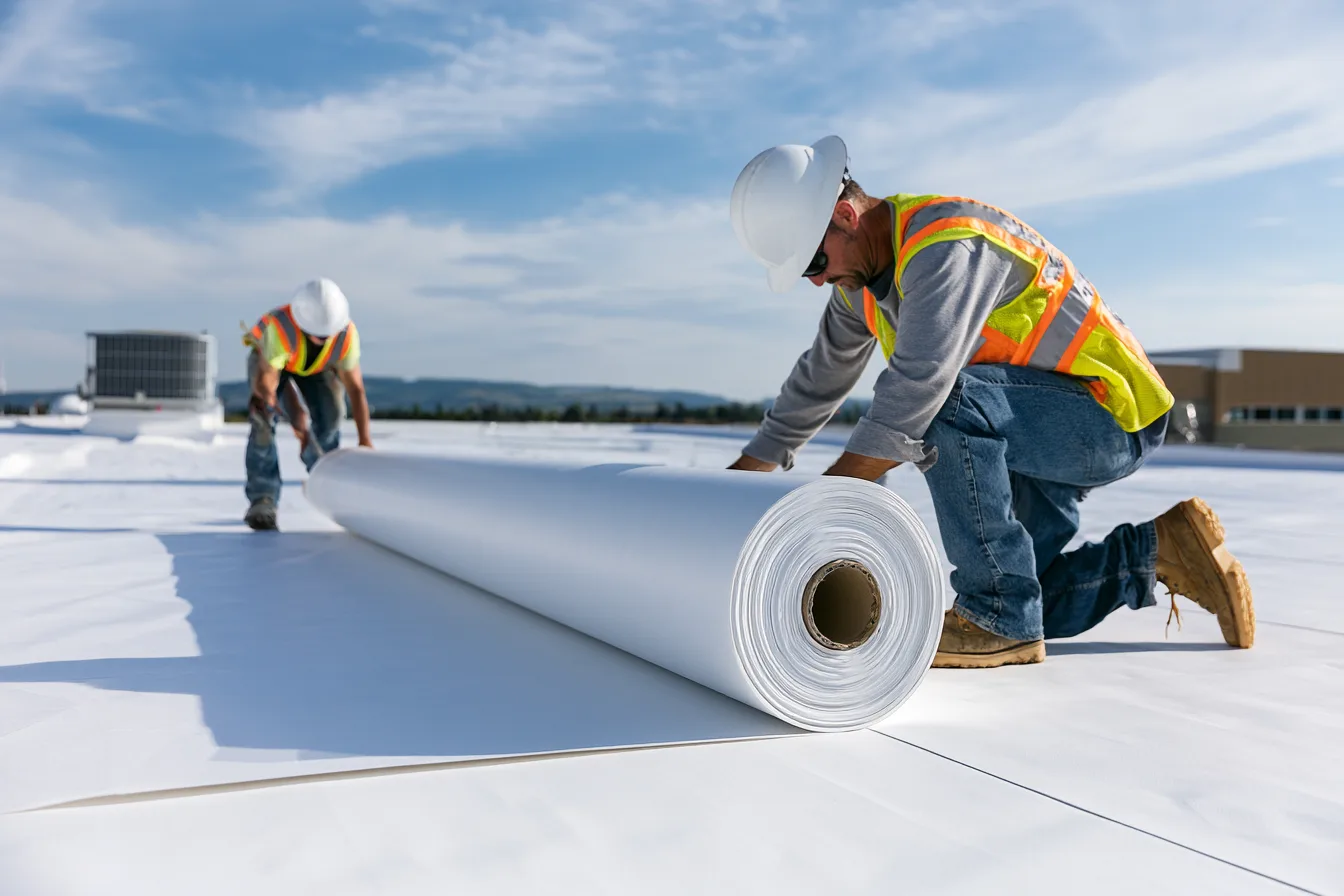
TPO is a thermoplastic single-ply roof membrane. Sheets are joined with hot-air welds to form the waterproof surface of a low-slope roof. It can cover broad roof areas and continue into the details around walls and rooftop equipment.
The assembly underneath matters just as much to the building. Insulation provides thermal resistance; a suitable supporting surface and attachment system help the membrane perform as designed. A white sheet by itself does not explain the insulation value or how the roof is secured.
For a Cave Springs owner considering a new system, the useful question is how that assembly fits the existing deck, drainage and building use. If the main problem is water that stays on the roof, the flat roof drainage page covers the slope and outlet decisions that belong alongside membrane selection.
The seams and details carry the waterproofing
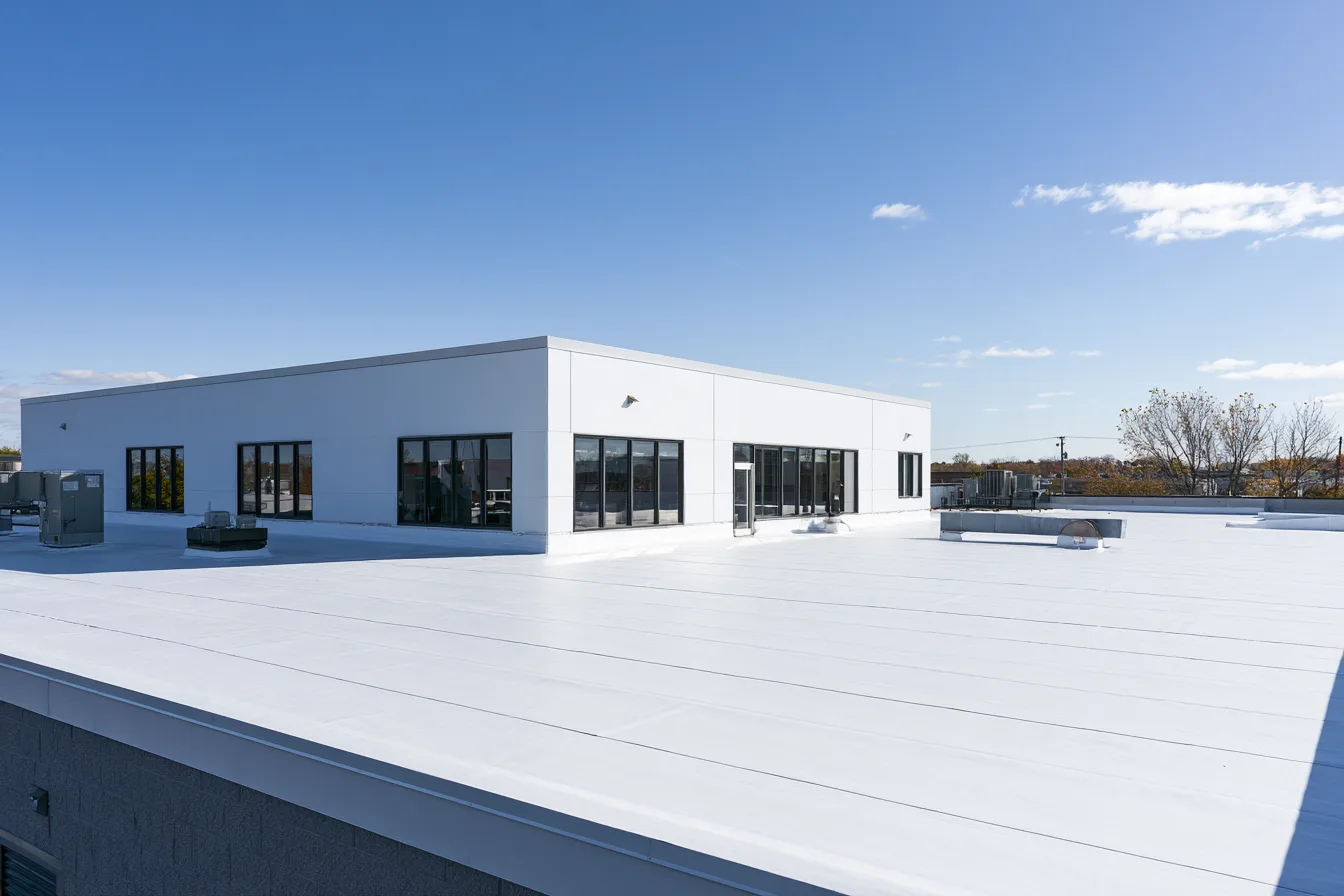
Large sheets cover the open roof. The smaller connections make that surface continuous where the building interrupts it. Three details help explain why a TPO project involves more than its square footage.
- Welded sheet joints
A seam needs a continuous weld. Test welds and inspection of completed seams help identify incomplete bonds that a glance across the roof can miss. A seam that looks closed is not, by appearance alone, proof of a sound connection.
- Curbs, corners and roof edges
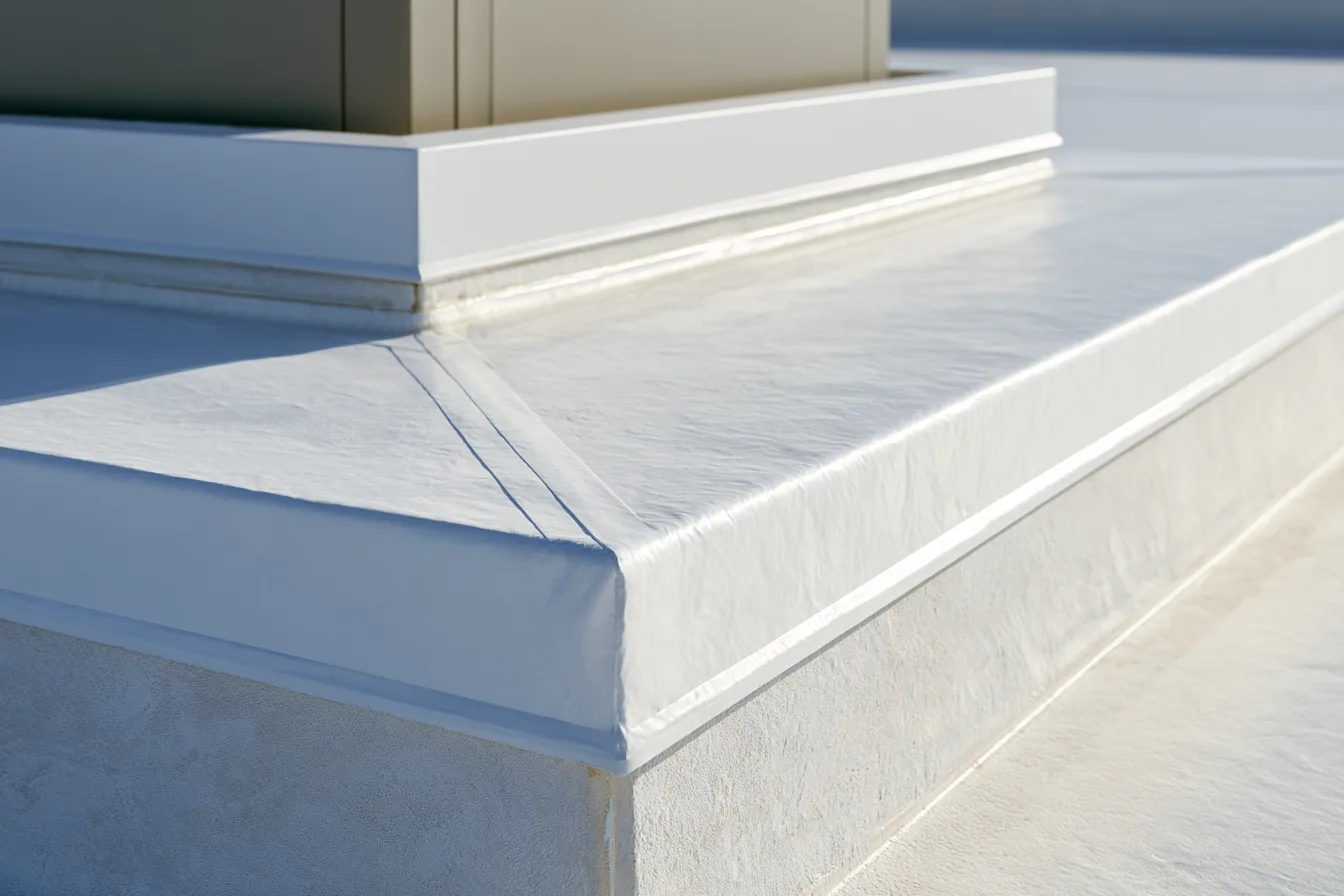
The membrane has to meet equipment curbs, wall bases and the perimeter without leaving an entry point. Corners change direction, while terminations finish the membrane against another surface. These details need their own compatible materials and attachment.
- Service access
A rooftop unit brings repeated visits by service trades. Designated walkways can help protect the membrane on those routes, while keeping drainage paths open. Equipment service and roofing details need to coexist throughout the life of the roof.
Repairing an existing TPO roof
A contained puncture or an isolated failed detail can be repairable without replacing the entire roof. The surrounding membrane needs to be sound enough for a compatible repair, with the work extending beyond the damaged area into suitable material.
On an older membrane, surface contamination and weathering affect the repair bond. Preparation and verification of that bond are part of the repair, not finishing touches. An assortment of old patches can also complicate what material a new repair can safely join.
If water has entered the assembly, repairing the surface and dealing with wet material are separate parts of the scope. Widespread deterioration or attachment problems call for a broader decision than another small patch.
A sound roof being considered for renewal may also have a coating restoration option. Coating suitability needs its own assessment; it is not an automatic next step for every aging TPO membrane.
TPO roofing questions
How much does installed TPO roofing cost in Northwest Arkansas?
Topline Commercial Roofing's 2026 Northwest Arkansas cost guide gives an installed TPO range of $8.50 to $16 per square foot, including labor, materials, insurance and typical overhead.
Its lower end describes a simple, large roof with no tear-off over a standard insulation layer. Its upper end describes removal of an old gravel built-up roof, tapered insulation to correct drainage and work around many rooftop units. Those are different scopes, so the lower figure should not stand in for the price of a full replacement.
This is one contractor's regional budgeting range, not a Cave Springs average or a Stonebrook Roofing quote. The roof area and proposed assembly still determine the project price.
Is a thicker TPO membrane always the better roof?
Thickness is one specification, not the complete assembly. The supporting layers, attachment and flashing details also affect performance. A thicker membrane does not correct poor drainage, wet insulation or an unsuitable substrate. The choice needs to fit the roof and the use it will receive.
Can TPO be installed over an existing roof?
Sometimes, when the existing assembly is suitable for an approved recover. Moisture, deterioration, the layers already present and the proposed attachment affect that choice. The commercial roofing comparison explains how recover differs from restoration and full replacement.
Can roof equipment stay in place during a TPO replacement?
Some equipment can remain while surrounding roofing and flashing are renewed. Other details may need equipment lifted or connections altered, especially when insulation changes the finished roof height. That coordination is established for the individual building and equipment, rather than assumed from roof size.
How long will a TPO roof last?
There is no dependable lifespan promise based only on the letters TPO. The assembly, installation, exposure, maintenance and damage history all matter. For an existing roof, its present condition is more useful than an age estimate alone when deciding what work is worthwhile.
Stonebrook Roofing
Put the whole TPO roof into the conversation
Whether the concern is one leaking detail or a replacement plan, start with the building and what you need the roof to do. Share the concern with Stonebrook Roofing.
(479) 333-1430