Stonebrook Roofing | Low-slope roof repair
Flat Roof Repair in Cave Springs
Water that keeps returning deserves a better explanation. A flat roof repair needs to address where water enters and whether it has a clear path off the building.
A flat roof still has to drain
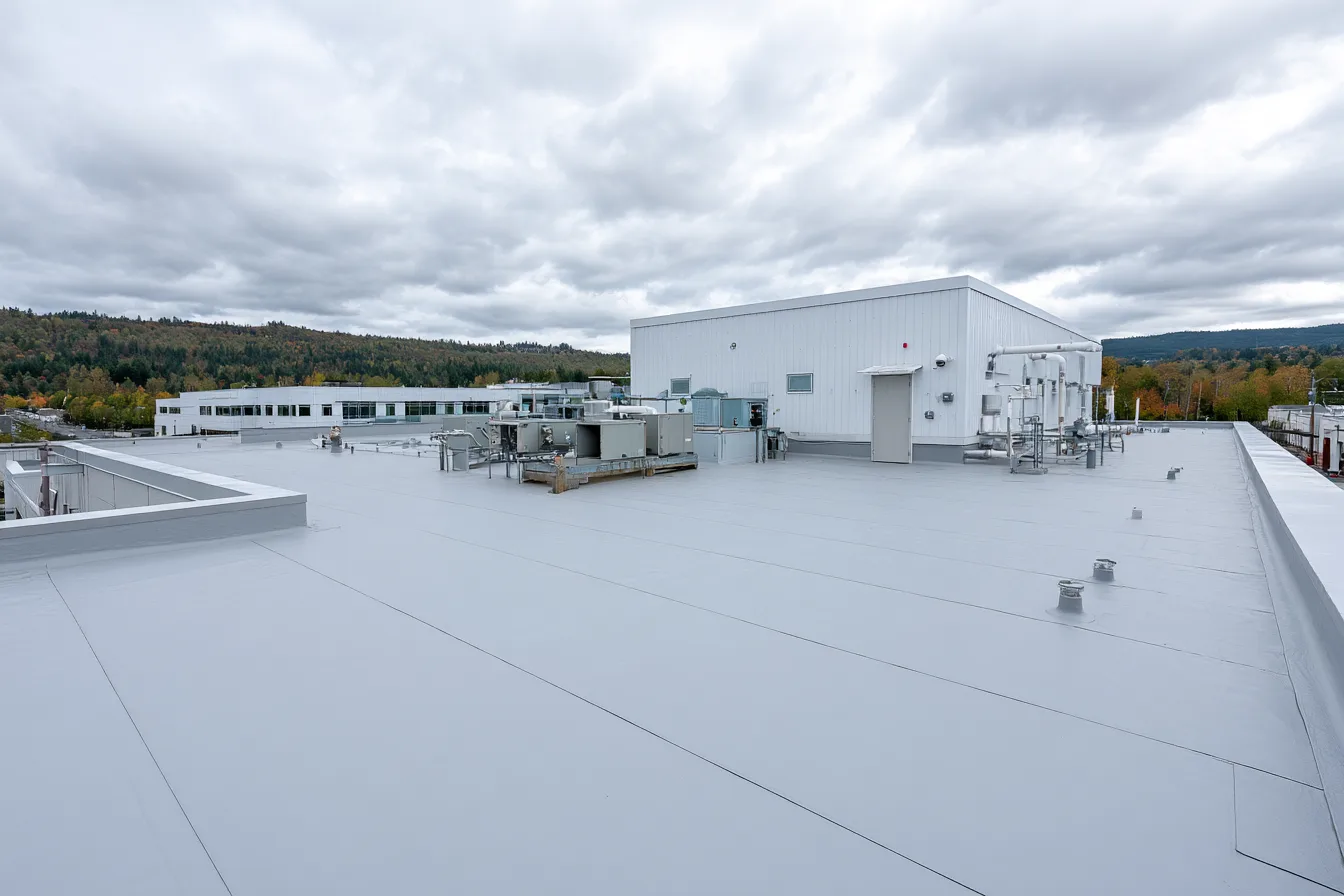
Low-slope roofs often look level from the ground, but water still needs a continuous route to an outlet. That route may come from the structure, tapered insulation above the deck, or a combination of both. A drain only helps the water that can reach it.
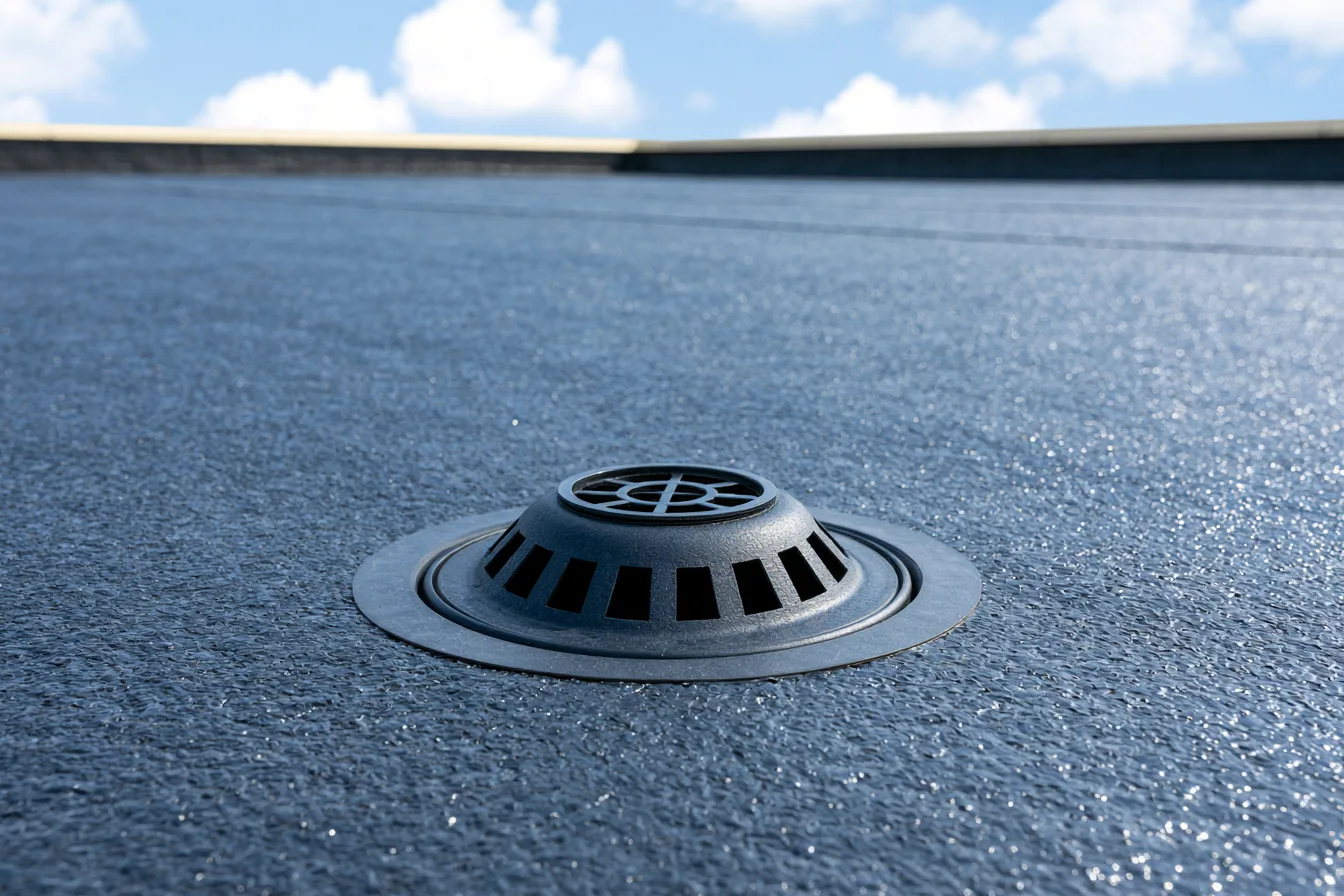
Interior drains carry water into drain piping. Scuppers let it pass through openings at the roof perimeter, often into an exterior conductor head or downspout. Other roofs drain toward a guttered edge. Each arrangement connects the roof slope to a way off the building.
The practical distinction is between an obstructed route and a roof that lacks a workable route in the first place. Clearing debris may address the former. A persistent low area or water trapped behind a curb can require changes to the roof assembly or drainage layout.
Separate the leak from the drainage problem
A leak and standing water can occur together, but they are not the same defect. Resolving both questions helps avoid paying for a patch that leaves a larger problem untouched.
- Water entry
A failed seam, flashing or connection around a penetration can admit water. The ceiling location helps orient the investigation, but the entry point may be elsewhere above it. Repair has to reach the actual opening and suitable surrounding material.
- Water movement
Debris at an outlet can slow drainage. So can a low section that sits below the path to the drain. The first calls for clearing and checking the outlet; the second calls for understanding the roof elevations and how water is meant to travel.
- The assembly below
Moisture beneath the surface changes the scope even when the visible defect is small. The repair may need to include affected insulation or other materials, rather than simply sealing the opening that let water in.
When the assembly needs broader work
Broader work should correct a specific limitation in the existing roof. These are examples of how a finding changes the solution.
| Finding | Work that may be needed | What that work changes |
|---|---|---|
| Water collects behind a curb or between drains | A designed tapered insulation or cricket layout, with compatible roofing above it. | Creates a path around the obstruction or toward the outlet instead of leaving water in the same low area. |
| Insulation is wet or no longer a sound support | Remove affected materials and rebuild the assembly to a suitable base. | Addresses the materials below the surface as well as the visible membrane defect. |
| Drainage capacity or layout is inadequate | Drainage design review, potentially including altered outlets or overflow provisions. | Matches the drainage arrangement to the building rather than assuming another surface patch can solve it. |
| Deterioration is widespread across the roof | Compare substantial repair with an appropriately designed replacement. | Brings repeated failures into one scope and makes room for assembly changes where they are needed. |
Flat roof questions
Does standing water prove my Cave Springs roof needs replacement?
No. The cause and the condition of the roof determine the work. A blocked outlet, a low area and a damaged assembly are different findings. Water that repeatedly remains on the roof deserves assessment even when the inside of the building is still dry.
Can a new membrane solve a drainage problem?
It can provide new waterproofing, but it does not by itself change the shape of the roof. Where the slope or outlets are the problem, those changes belong in the assembly design. The TPO roofing page explains how membrane and supporting layers work together.
Would a coating be enough for a roof that ponds water?
Coating suitability and drainage adequacy are separate decisions. Even a coating approved for the expected water exposure leaves the existing slope in place. The roof restoration page explains what a suitable coating project needs from the roof beneath it.
Why might a leak appear only during some rainstorms?
Rain direction, intensity and how quickly water drains can change which defect becomes noticeable. A wall or curb connection may admit water under one condition, while water building up near an outlet reveals another. The timing helps narrow the investigation but does not identify the cause on its own.
Is it reasonable to keep repairing the same flat roof?
Yes, if the repairs address separate contained defects and the remaining roof is sound. Repeated work at the same location without resolving the cause is a reason to revisit the diagnosis. When deterioration or wet material is widespread, the commercial repair and replacement comparison helps frame the larger decision.
Stonebrook Roofing
Get to the reason your flat roof keeps leaking
Tell Stonebrook Roofing where the water shows up and whether it follows rain, collects on the roof or returns after a repair. Those details give the conversation a useful start.
(479) 333-1430